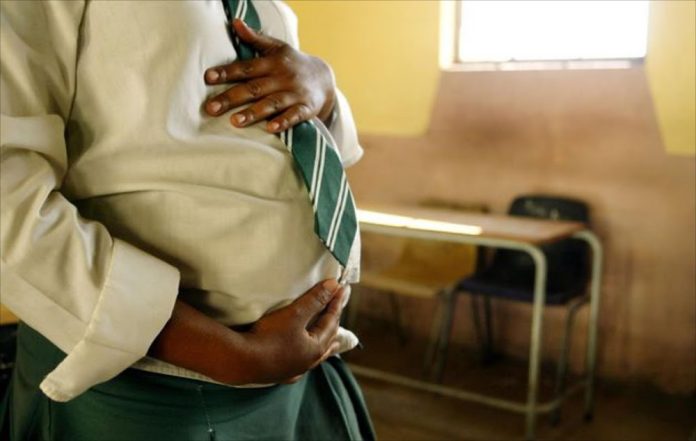
South Africa is facing a teenage pregnancy epidemic that activists, legal experts, and government ministers warn is robbing young girls of their futures and trapping them in cycles of poverty.
The scale is staggering. According to Stats SA, nearly 124,000 births were recorded among mothers aged 19 and younger between January 2024 and February 2025 . In Mpumalanga alone, health MEC Sasekani Manzini confirmed that 9,712 teenagers gave birth in 2025 – including a 14-year-old who delivered on New Year’s Day .
“Teenage pregnancy is a concern for government,” Manzini said, noting that officials must now fill out forms for every teenage birth to alert cluster departments including social development, police, and justice to curb statutory rape .
Social Development Minister Sisisi Tolashe has labelled the crisis a “national disgrace,” revealing that South Africa’s adolescent pregnancy rate remains more than five times the global average . She disclosed that in KwaZulu-Natal alone, 375 cases of pregnancy among children aged 10 to 14 were reported in the third quarter of 2025/2026 .
The Democratic Alliance has called for an urgent parliamentary hearing after revealing that 421 children aged 10 to 14 fell pregnant in KwaZulu-Natal in the 2025/26 financial year – almost three children being impregnated every two days in just one province . Many of these pregnancies are not consensual. LifeLine Pietermaritzburg reported that between 70% and 80% of pregnancies in girls aged 10 to 14 are linked to statutory rape involving men aged 30 and older .
“These young girls need counselling and support so that they understand their rights were violated. Only then are they willing to report the statutory rape,” said LifeLine executive director Sinikiwe Biyela . She warned that official figures represent only a fraction of the reality, with many cases going unreported until boyfriends stop providing financial support .
The consequences extend far beyond childbirth. The Commission for Gender Equality found that only one in three adolescent mothers returns to school, with the likelihood declining significantly as time passes . Research shows that 33% of young girls who become pregnant are forced to drop out completely . Legal experts Gauta Mashego and Teri Brown from Section27 argue that pregnancy does not happen in isolation but “within the context of poverty, inequality and limited opportunities” . They identified several barriers preventing pregnant learners from completing their education, including stigma, statutory rape, limited access to healthcare, and lack of sexual health awareness .
A government diagnostic evaluation found that while South Africa has strong policies on paper, implementation is fragmented and inconsistent . The report revealed weaknesses in the National Child Protection Register a solution intended to prevent people found unsuitable to work with children from being employed in schools . In March 2025, only 12% of educators were vetted against the register . This leaves learners vulnerable to educators who have been found unsuitable to work with children.
Deputy Minister in the Presidency for Women, Youth and Persons with Disabilities, Mmapaseka Steve Letsike, has called for a “whole-of-society” response, arguing that the private sector, communities, and young people themselves must be co-creators of solutions . “Our challenge is not that we lack solutions,” Letsike said. “Our challenge is that too many of those solutions exist alongside one another rather than with one another” .
Section27 is calling for stronger child protection measures, comprehensive sexual education, youth empowerment programmes, and accountability measures that address root causes including gender inequality, poverty, and gender-based violence . Without urgent, coordinated action, thousands more young girls will have their futures stolen before they even begin.

